
A manager reports that the team is doing well. The schedule looks orderly, nobody has raised a complaint, and the manager wants capable employees to have room to work. Ask which completed work the manager inspected before reaching that conclusion.
The answer gives the conversation somewhere concrete to begin.
The Realities of Ownership includes the saying “Titles are verbs.” The entry connects a management title with an act the company expects someone to perform. A manager who inspects the work and decides to leave a capable team alone has exercised judgment. The inspection and the decision give substance to the title.
An owner can use that entry to help a manager describe what the manager will examine, how the manager will judge it, and what happens after a problem appears.
Choose completed work
Begin with something the team has actually delivered: a finished customer report, a completed service visit, or an order prepared for collection. Choose work the manager is responsible for supervising.
Put the assignment beside the result. What was requested? What would satisfactory completion look like? Which parts can the manager check directly, and which require an explanation from the employee who performed the work?
Keep the example narrow enough to inspect together. A broad claim about the department can hide several different kinds of work. A completed report and the instructions that produced it let the owner and manager discuss the same evidence.
This exercise applies the handbook's entry to a particular company. The owner supplies the local context and the standard the manager is expected to uphold.
Describe the inspection
Suppose a service company sends a customer a completion report after a visit. The manager could compare the report with the assigned work, check that an unresolved item has a named follow-up, and confirm that the customer received the promised information.
Those checks describe actions. The manager can perform them, explain the findings, and ask for a correction when a promised item is missing. An owner reviewing the example can see how the manager reached a conclusion.
Use the records your company already keeps. If an important part of the work cannot be checked from those records, identify what the manager needs to observe or ask. Keep the inspection focused on the result the company assigned and the information needed to evaluate it.
Follow the correction
Finding a missing item begins another piece of management work. Establish what needs to happen, who will perform it, and when the manager will check the result.
In the report example, an unresolved customer question might need an answer from the employee who attended the visit. The manager can assign that follow-up and check that the answer reaches the customer. If the same omission appears again, the manager has an actual example to discuss with the employee.
The handbook traces both visible rework and consequences that may escape an ordinary account of a problem. In this example, those consequences could include another employee reconstructing the visit or a customer calling again for information already promised. Record what happened so the discussion can follow the work and the extra demands it created.
Agree on the next review
Decide how the manager will continue inspecting this kind of work. The appropriate approach depends on the assignment, the team's demonstrated performance, and the consequences of a missed item. Have the manager explain the proposed approach against those conditions.
Agree on when the owner needs to hear about a problem. Identify the commitments the manager can make while correcting it and the decisions that require further approval. This gives the manager a way to act when the next exception appears.
At the next conversation, ask for completed work, what the manager found, and the follow-up the manager checked. A clean result can support the decision to give the team more room. A recurring omission supplies a concrete subject for coaching.
Choose a current management responsibility and write the inspection, the judgment it supports, and the follow-up the manager will check next week.
Related book
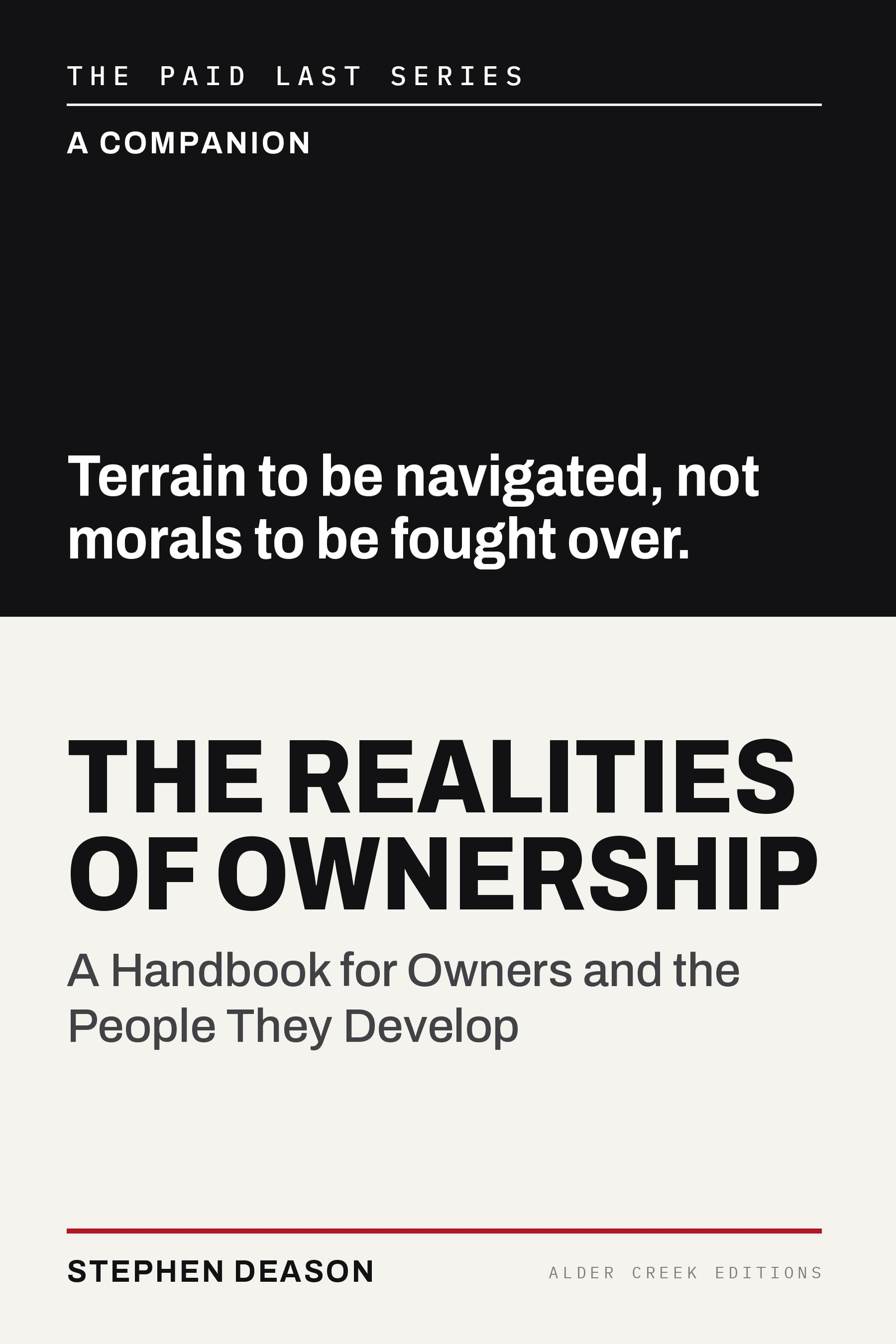
The Realities of Ownership: A Handbook for Owners and the People They Develop, by Stephen Deason. The hardcover is the companion to The Paid Last Series. Residual Claimants is Volume One.