
The work is scheduled. The customer has received a reply. Someone has checked that the necessary materials are available. Then a question reaches the owner: should the company rearrange another customer's job to accommodate this request?
Each person has completed an assigned task. The decision requires someone to weigh the jobs together. A scheduling choice now involves promises, capacity, customer relationships, and work already underway.
Residual Claimants builds a sequence for developing that judgment. Its opening chapters begin with seeing work accurately, supervising it, and applying consistent standards. The sequence then moves toward decisions involving other people, company resources, and uncertainty. An owner developing someone else can start with a recurring question already arriving at the owner's desk.
Describe the decision
Choose an example you can examine after the immediate pressure has passed. Use the actual messages, schedule, and work records. Write the question that required a decision.
“Customer problem” names a subject. “Should we move an agreed appointment to accept an urgent request?” names a choice. Record who asked for the change, what the company had already promised, and when an answer was needed.
Keep the available facts separate from assumptions. A customer saying a job is urgent tells you what the customer has requested. The schedule shows which commitments could be affected. The person responsible for the work can explain what a change would require.
Ask the manager reviewing the example to reconstruct the situation from those records. Notice which details the manager requests before offering an answer.
Follow the work across the boundary
A department can finish its portion while leaving another department with a problem. In the scheduling example, accepting the urgent request may require someone to contact the displaced customer, prepare a different set of materials, or change a worker's assignment.
Name each piece of work and the person who would have to perform it. Ask what happens to an existing commitment when that person changes tasks. Include the time someone would spend explaining and coordinating the change.
The book asks readers to reason from the position of the person paid last. For this exercise, follow the consequences beyond the team making the request. Look for work repeated, promises changed, and capacity committed elsewhere. Record consequences the company can establish, and mark those that remain uncertain.
Ask for a recommendation
Have the manager propose a course of action and explain the reasons. Ask which commitment the recommendation protects, which consequence the company would accept, and what information might change the recommendation.
The owner can then make the reasoning visible. Perhaps the schedule includes a commitment the manager could not see. Perhaps the manager has identified a workable alternative the owner missed. Put that information beside the decision so both people can examine it.
Residual Claimants emphasizes practice before greater exposure. A completed example gives the manager room to explain a judgment while the owner can compare that explanation with the decision actually made. Begin with a decision whose scope the manager can understand and whose consequences you can review together.
Set the next boundary
Use the discussion to clarify what the manager may decide next time. Identify the information the manager must check, the commitments the manager may change, and the condition that requires the question to return to the owner.
Keep that boundary specific to the work. “Handle routine changes” leaves the meaning of routine unresolved. An instruction tied to existing commitments, confirmed capacity, and a named approval point gives the manager something usable.
Arrange to review what happened after the next decision. Compare the expected consequences with the actual work, including any follow-up another team had to perform. Revise the boundary when the example shows that information or authority was missing.
Bring a recent escalation to the next development conversation, write the choice at the top of the page, and ask the manager to recommend an answer with the affected commitments beside it.
Related book
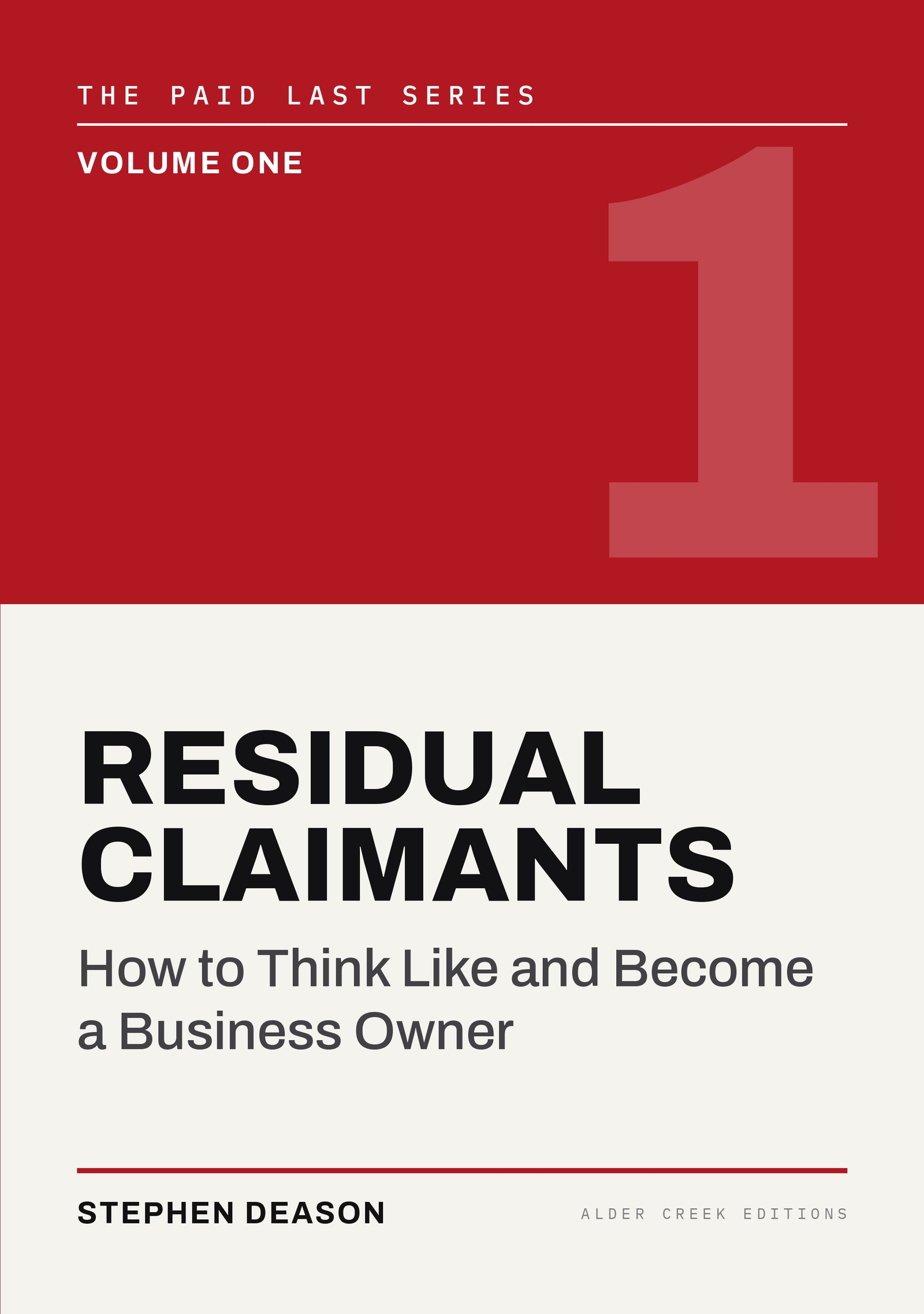
Residual Claimants: How to Think Like and Become a Business Owner, by Stephen Deason. Volume One of The Paid Last Series is available in hardcover. Its opening chapters are free to read.