
The Sitting Room Series
Books for dementia caregivers
Large-print guides, journals, and writing tools for the decisions, records, and changes that family care can bring.
Explore The Sitting Room Series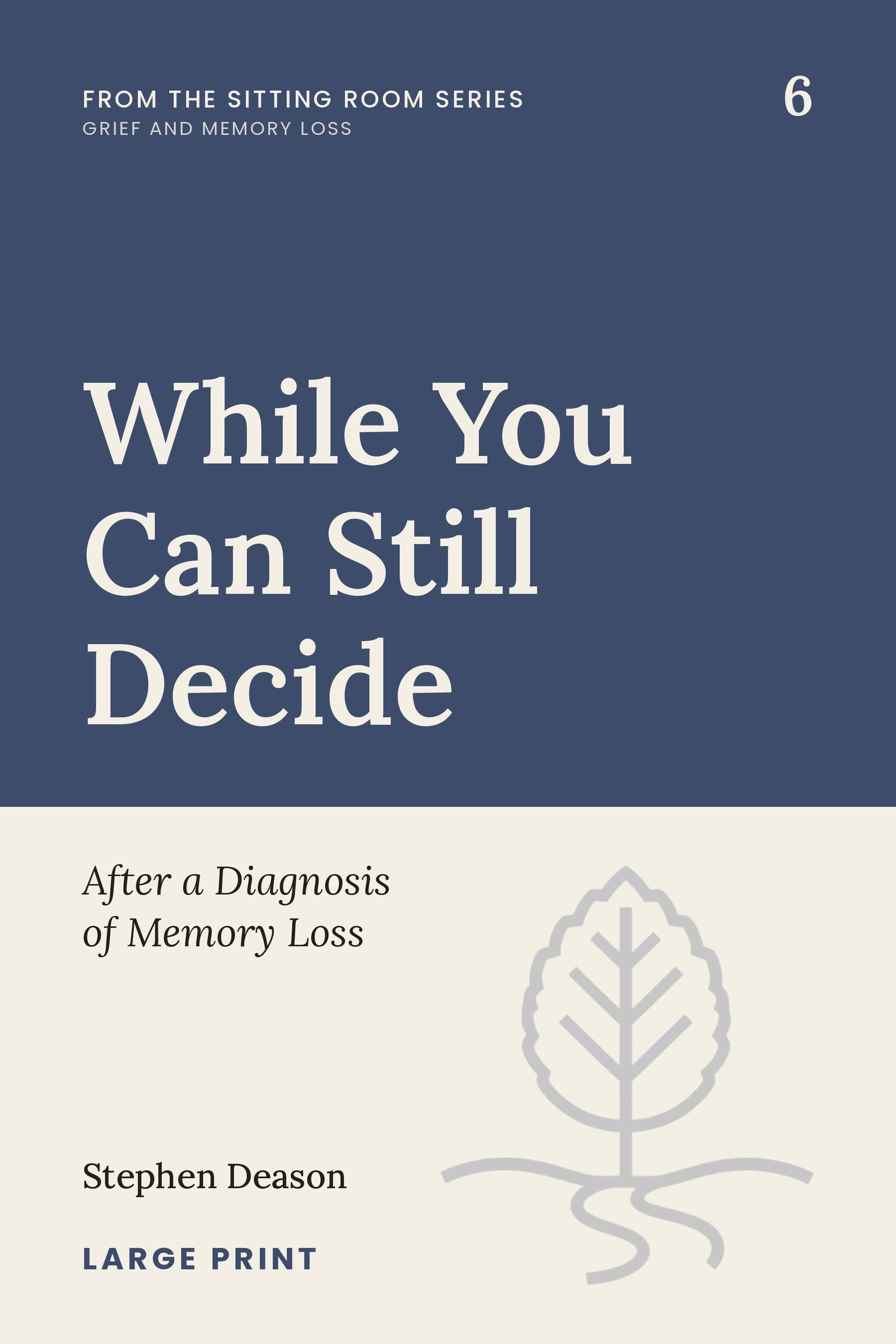
For care that is changing
A book can give the next conversation a place to begin.
Dementia caregiving often brings questions that do not stay in one room. A family may be talking about a changed diagnosis, a new appointment, a medication question, a person’s wishes, a difficult visit, or the record that needs to travel to the next call. The question can change before a caregiver has finished explaining the last one.
Alder Creek Editions publishes large-print books for the person receiving care and the family around that person. The Sitting Room Series gives a caregiver a place to read, write, and prepare for the next useful conversation. Some titles focus on decisions while a person can still take part. Others make room for grief, a daily record, or the observations that one family member needs to share with another.
These books do not turn a family situation into a standard path. A diagnosis, a care plan, a household, and a person’s wishes all matter. The books help a caregiver name what has changed, keep a dated record, and carry a clearer question into the conversation with the people responsible for care.
A book can also give relatives a common starting point when each person has seen a different part of the week. One person may carry an observation from a visit, another may remember a question from an appointment, and another may need to know what was decided. Writing those details down does not solve every problem. It helps the family begin the next conversation with the same picture in front of them.
For decisions that need time
Keep the person at the center while choices are still possible.
While You Can Still Decide: After a Diagnosis of Memory Loss is for the period after memory loss enters the family’s vocabulary and before every decision becomes urgent. The book helps a reader prepare for conversations about health care, money, legal documents, driving, work, home, and the practical choices that may be easier to discuss while the person can still explain what matters.
The book is not a substitute for a clinician or attorney. Its purpose is to help a caregiver and the person receiving care arrive with a clearer record of priorities and questions. A family may need to ask who should be present at an appointment, what a document does, what change needs to be reported, or what should be written down before a future conversation becomes harder.
The value is in making space for the person whose life is changing. A caregiver can use the prompts to listen for what that person wants, then carry those words into a professional conversation without claiming to speak for someone who can still speak for themselves.
For grief during care
Make room for the loss that arrives before a death.
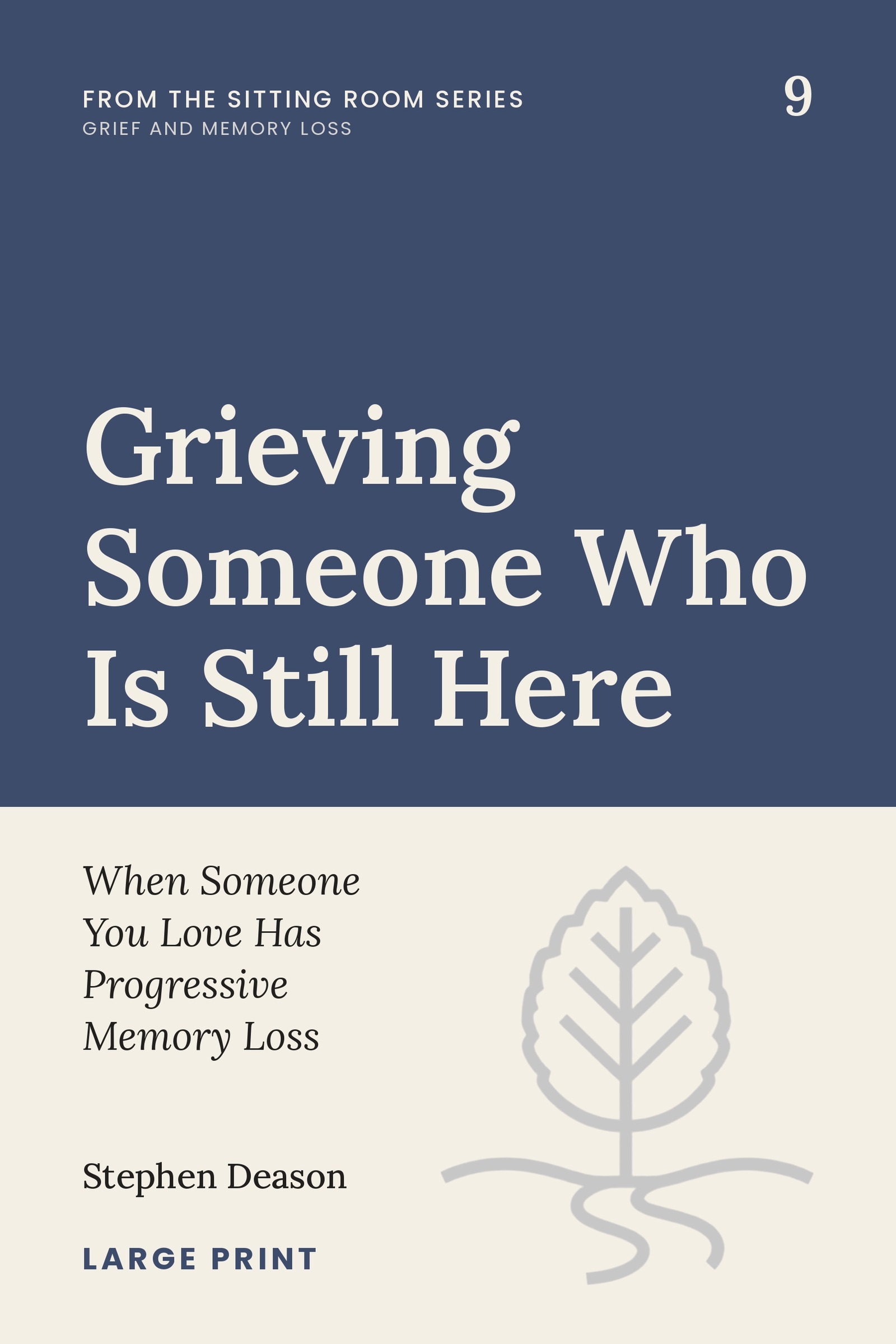
Grieving Someone Who Is Still Here: When Someone You Love Has Progressive Memory Loss is for a caregiver living with a change that is both present and unfinished. A husband, wife, adult child, sibling, friend, or other care partner may be carrying love, anger, guilt, loneliness, relief, and a new load of practical work at the same time.
The book does not tell a caregiver what they should feel. It gives language to experiences that can be difficult to name when a person is still here and still changing. It also makes room for the questions that come alongside grief: when to ask for a break, how to speak with the rest of the family, what to report to a doctor, and how to recognize when home is no longer safe for the person or the caregiver.
A caregiver does not have to complete every part of this book to benefit from it. A single page can help a reader identify the pressure of the day, prepare a conversation, or understand that a difficult response does not need to stay unnamed.
For the record the family shares
Write down what no single visitor sees.
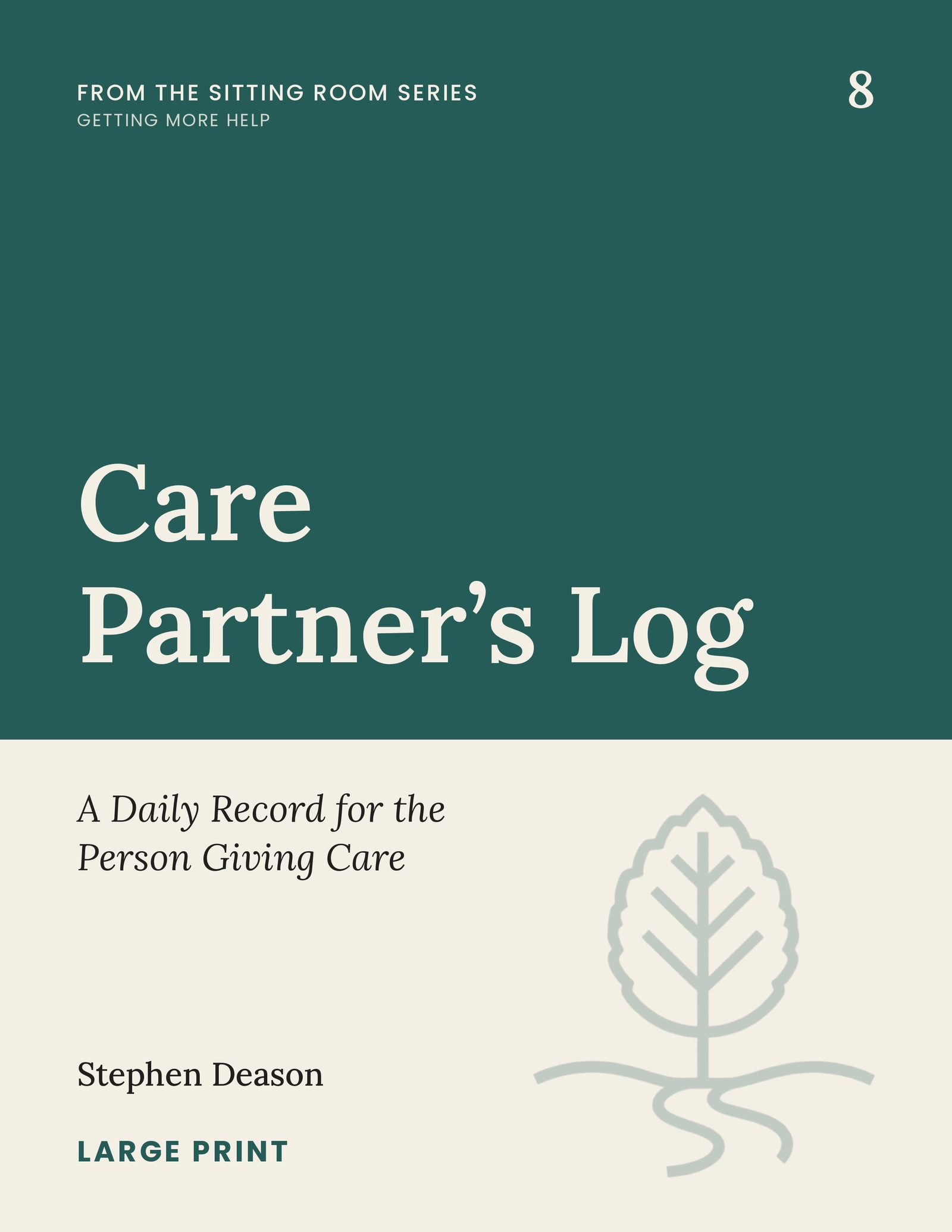
Care Partner’s Log is a daily record for the caregiver who notices what happens between visits, calls, and appointments. It gives a family pages for observations, medications, questions, and information that may be useful to a doctor or nurse. A written record cannot decide what a change means. It can make the next report more specific than a memory reconstructed under pressure.
Visit Journal gives several visitors a way to see the recent picture together. A visitor can read what happened before, write down what they observed, and leave a useful note for the next person. That shared history can help a family notice a pattern, remember a question, or bring dated observations to the appropriate professional.
Both books support a family’s own record. They do not replace clinical charts or professional judgment. Their practical value is simple: the person who makes the next call does not have to begin with a blank page.
Choose the question that is already here
Begin with the part of care that needs words or a record.
A caregiver facing a decision may begin with While You Can Still Decide. A caregiver carrying grief may begin with Grieving Someone Who Is Still Here. A family that needs a daily record may begin with Care Partner’s Log, while visitors who take turns may need Visit Journal. Each book has its own purpose, and a family can begin with the title that fits the present need.
The wider Sitting Room Series includes practical guides, workbooks, and journals for older adults and the families around them. The series keeps each title’s available formats, printable materials, and edition details together, so a reader can choose a book without having to search across several places for the next useful page.
For an emergency, call 911. For a crisis, call or text 988. For ongoing care questions, use these books to prepare a clearer conversation with the clinician, attorney, social worker, care provider, or other qualified person responsible for the question at hand.
Frequently asked questions
Which book should a dementia caregiver begin with?
Choose the book that matches the question in front of the caregiver. While You Can Still Decide is for decisions and paperwork after memory loss. Grieving Someone Who Is Still Here is for the emotional work of caring for a person whose memory is changing. Care Partner’s Log is for keeping a dated family record.
Are these books medical advice?
No. These books give readers questions, writing space, and practical records for their own conversations. They do not diagnose memory loss, interpret clinical instructions, or replace a doctor, nurse, attorney, or other qualified professional.
Are there free dementia caregiver books to download?
Several Sitting Room titles have free printable editions or printable pages. Each book page states the currently available formats and gives the direct download or purchase path for that edition.
Can a family share these books?
Yes. Care Partner’s Log and Visit Journal are made for a shared written record. Other titles can help a husband, wife, adult child, sibling, friend, or other caregiver name a question before a family or professional conversation.