
Imagine that a ride arranged for your husband arrives late. You call the provider, explain the problem, and receive a promise that someone will look into it. Later, another relative asks whom you spoke with and when the reply is due. The details are spread between a calendar, a text message, and your memory.
Bring those details into a dated record. Keep the event, the contact, the promised response, and what happened afterward together so that the next conversation can begin with the information already gathered.
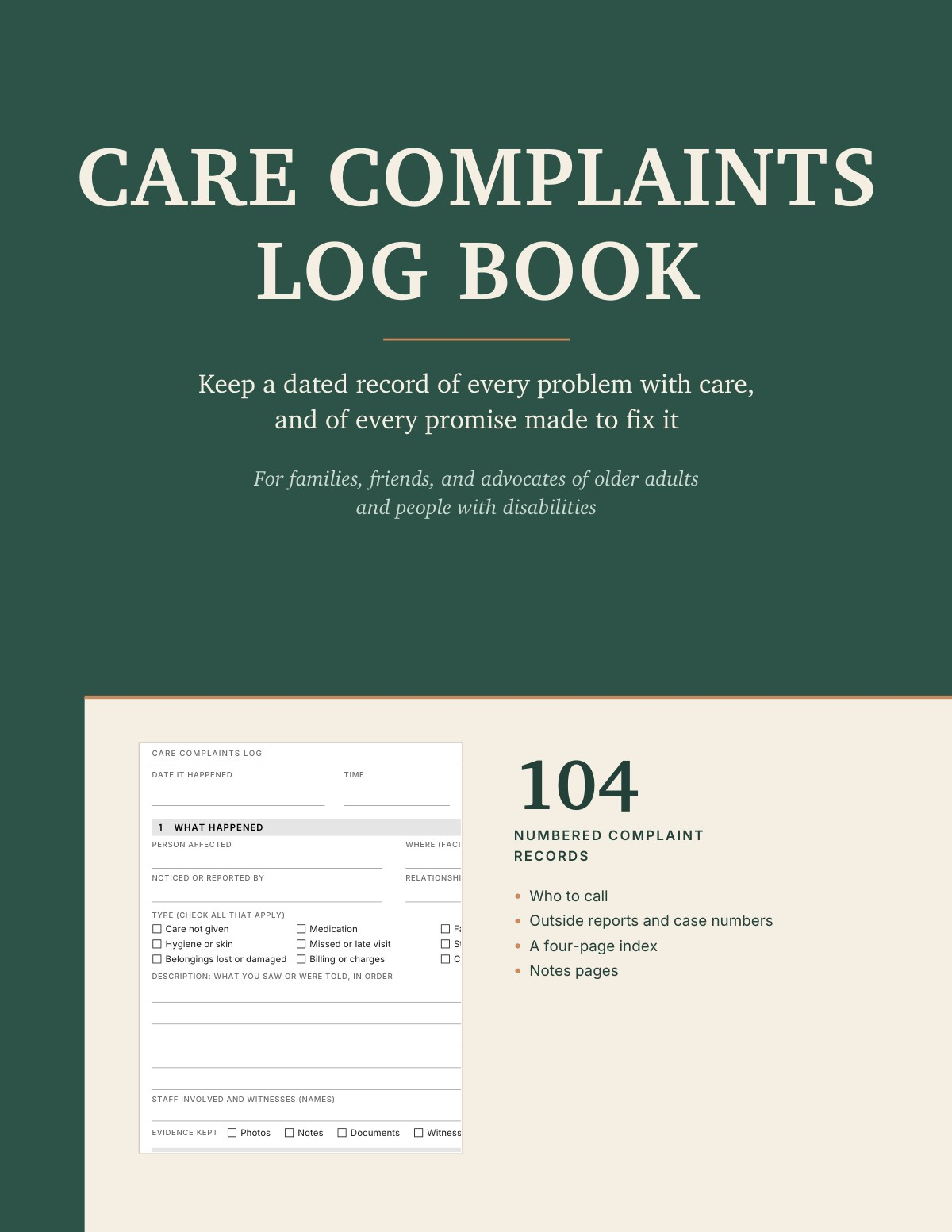
Care Complaints Log Book provides a separate numbered page for each complaint, an index, contact pages, and space for outside reports and case numbers. The family free PDF is intended for people recording concerns about care.
Begin with what happened
Use the record's date and time fields. Name your husband as the person affected and describe the location or service involved. If you learned about the event later, use the separate field for when it was noticed.
Write what you saw or were told in order. In this example, record the arranged collection time, the arrival time shown in your notes, and what your husband said about the delay. Make clear which details you observed and which came from him.
Keep your husband's account in his words where you can quote accurately. If you are summarizing, say that he reported the detail. Include the effect he describes, such as an appointment he needed help rearranging.
Preserve the information behind the entry
The record asks about staff involved, witnesses, and supporting materials. Note where the confirmation message and your call notes are kept. Keep the originals in the place you name so that another authorized family member can find them.
Ask your husband what he wants included and who should have access to the completed record. Store the log somewhere private. A concern about a service may involve health information and contact details as well as the event itself.
Give the complaint its record number and add it to the index. When you return to the same concern, use that number to locate the original entry and its follow-up.
Record the promise precisely
The Who You Told section asks for the contact's name and title, the date and time, and the method of communication. Write down what the representative said would happen and the date given for a reply.
If the representative has offered to investigate but supplied no response date, ask when you should expect an answer. Record the answer you receive. Keep an unanswered timing question visible if the representative cannot give a date.
When a message arrives, add the date and the response to the same complaint record. If the message addresses only part of the concern, identify the part that still needs an answer. A relative helping with the next call can then see what has already been discussed.
Check the result with your husband
The log includes space for what was done and whether the problem was fixed. It also asks whether the person receiving care is satisfied. Ask your husband what changed and whether the response addresses his concern.
If the provider explains a new arrangement for rides, check that your husband understands how to use it. Record the remaining question if the explanation is unclear. Follow the provider's written complaint procedure when pursuing the concern, and keep the communication with the record.
Choose a follow-up date in your calendar and name the contact you intend to reach. Share that arrangement with any relative who has agreed to help, within your husband's wishes about sharing information.
Before the follow-up call, place the original concern, the promised response, and your husband's unanswered question together in front of you.
Related book
Care Complaints Log Book is available as a complete free PDF for families, friends, and advocates recording concerns about care.