
Alder Creek Editions
Aging, Care, and Family
Practical reading for the parts of care that need a shared record, clearer questions, and a named next step.

Start here
Make the next handoff easier to carry.
This guide begins with the family. For ongoing, practical perspectives on care at home, continue into OPA Home Care's library.

Caring for Aging Parents: A Practical Checklist
A calmer way to organize conversations, health information, home support, responsibilities, and the next handoff.
Read the guide
Questions to Ask Your Aging Parents About Care
A practical way to begin conversations about priorities, support, records, and who should help carry the next step.
Read the guide
How to Set Up a Caregiver Binder That Gets Used
A practical place to keep appointments, questions, contacts, and the next family handoff easier to manage.
Read the guide
Caregiver Responsibilities: Make the Work Shareable
A family-first way to name the care work, set practical boundaries, and make the next handoff clearer.
Read the guide
Caregiver Burnout Stages: Changes to Notice
Recognize mounting strain, share the work earlier, and find a safer next step when care is changing.
Read the guide
The family member who carries the handoff
Draw on The Weakest Link to prepare a clear family care handoff, name the next action, and confirm who will carry information between offices.
Read the article
The work between the appointments
Use The Invisible Architecture and its Family Integrator’s Handbook to prepare appointment questions and record the work that follows a visit.
Read the article
Make the care plan usable by another person
Use The Family Integrator’s Handbook to record the care plan, name each helper’s task, and leave instructions another relative can follow.
Read the article
Talk about what has changed
Use When More Help Is Needed to describe changes in daily life and prepare a family conversation about the help your relative wants and needs.
Read the article
Find the office that handles the problem
Use Who to Contact to describe your father’s concern, find the office that handles the question, and record the promised response and follow-up.
Read the article
The information someone else needs to find
Use Emergency Information Sheet to keep your husband’s current care contacts and essential information together where another helper can find them.
Read the article
Start with the paper nobody can find
Use Before It’s Urgent to locate your aunt’s important papers, record where each document belongs, and tell the relative who may need to find it.
Read the article
The ordinary story worth leaving your family
Use Things I Want You to Know to invite your grandmother’s memories, preserve her words, and leave room for the story she wants to tell next.
Read the article
Keep your mother in the conversation
Use While You Can Still Decide to keep your mother’s preferences in a care conversation and record the questions she wants to ask after a diagnosis.
Read the article
Describe the day before you hire help
Use Arranging Care at Home to describe your father’s day, compare help with actual tasks, and prepare questions for a prospective care provider.
Read the article
Leave a note the next care partner can use
Use Care Partner’s Log to record your husband’s daily observations, appointment details, and open questions for the next relative helping with care.
Read the article
When an ordinary visit brings grief
Use Grieving Someone Who Is Still Here to describe what has changed with your aunt, notice what remains, and arrange practical help for a visit.
Read the article
A visit note that helps the next visitor
Use Visit Journal to record an observation, a question, and an agreed follow-up so the next relative can prepare for a useful care visit.
Read the article
Ask the same question on every tour
Use Choosing a Place to Live to ask the same practical questions on each tour and compare the answers with your relative’s actual daily needs.
Read the article
A check-in after moving day
Use The Move and the First Months to prepare a family check-in after moving day, record what has changed, and confirm who will follow up.
Read the article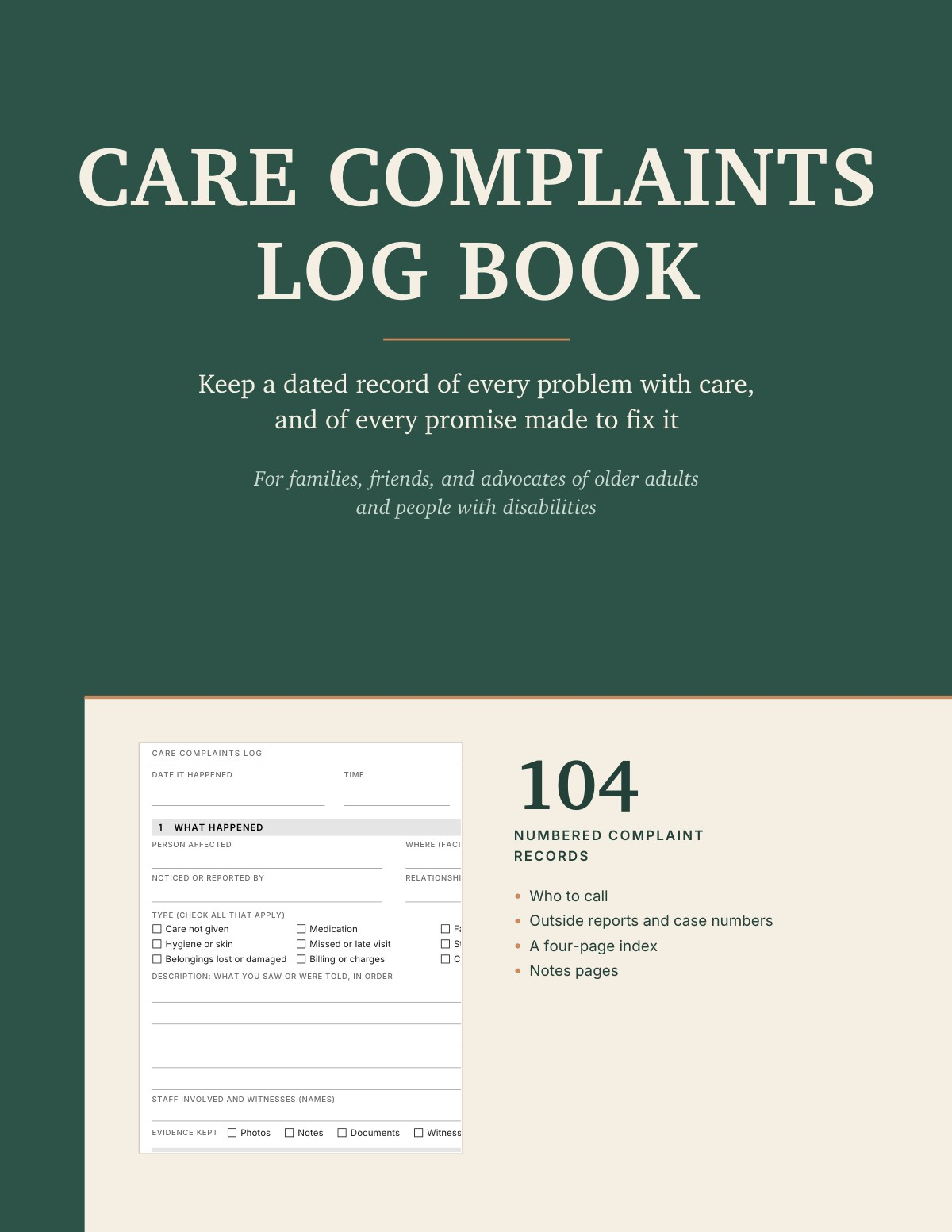
Keep the concern and the promised response together
Use Care Complaints Log Book to keep a family care concern, the promised response, and the next follow-up together in a dated record.
Read the article
An undated page leaves room for an uneven year
Use First-Year Grief Journal to write about an uneven year at your own pace, return to an unfinished page, and record what matters today.
Read the articleOPA Home Care
Continue with care at home
Explore a larger library of current articles for families navigating changing needs, home support, and care transitions.
Visit OPA Home Care