
You and your mother can describe the same week differently. You remember the missed grocery trip. Your mother remembers getting dinner together anyway. Both accounts contain information the family needs before choosing help.
A useful conversation begins with a task and your mother’s experience of doing it. Ask what has become harder, what still works, and what your mother wants to preserve. Those answers give the family a concrete starting point.
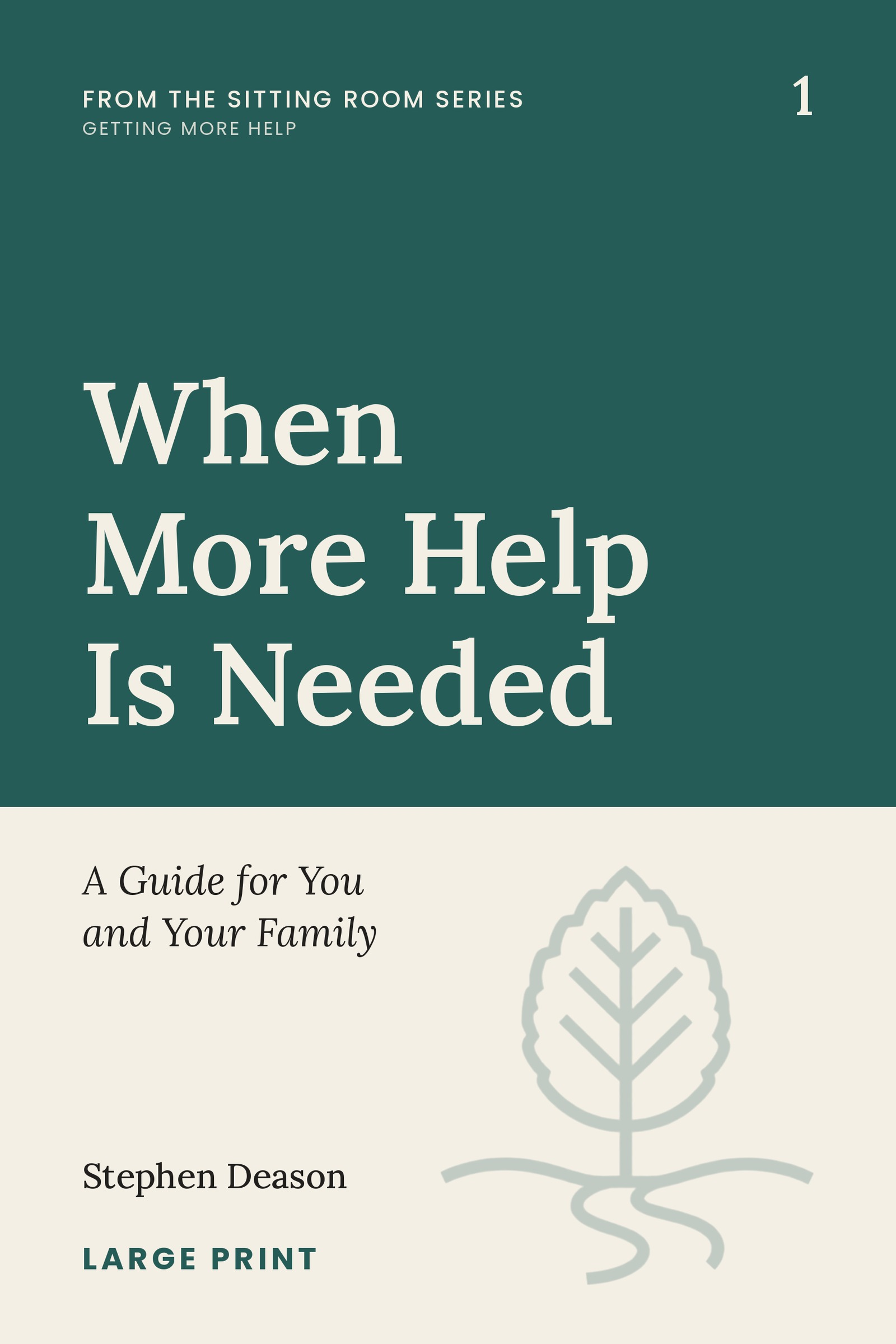
When More Help Is Needed, the opening book in The Sitting Room Series, includes worksheets for moving from observations to a decision. The free worksheet packet offers a way to prepare the conversation and record the next step.
Start with an ordinary difficulty
The worksheet Keeping a two-week record asks the person using it to note what was harder that day and what the person did about the difficulty. At the end of the recording period, the reader looks for things that happened repeatedly. The period gives the reader a bounded stretch of daily observations to review.
A record might show, for example, that carrying groceries upstairs has become difficult. That observation opens a practical conversation about shopping, delivery, stairs, and carrying bags. Ask your mother which part of shopping caused the problem.
You can bring a specific observation to that conversation while leaving room for your mother’s account. “I noticed the groceries were still in the car when I arrived” gives both people a recognizable event to discuss. Listen to what happened next and how your mother handled it.
Ask what your mother wants to keep
The worksheet What matters most to me asks about where the person wants to live, an ordinary good day, activities the person wants to keep doing, and tasks the person would welcome help with. It also asks about people and places that matter.
Complete those prompts before choosing a service. A person may value choosing groceries and cooking while welcoming help carrying heavy bags. Another person may welcome meal preparation and want to keep visiting the store. The tasks sound similar from a distance; the preferred help differs.
Give your mother time to answer in her own words. Ask which part of the routine brings pleasure and which part consumes energy. Write down the priorities the family should preserve when comparing possible arrangements.
Prepare the first conversation
Planning the conversation provides spaces for who should attend, where and when to talk, the opening sentence, and the next step the person would like everyone to agree on.
Use those prompts to keep the discussion manageable. Choose a setting where your mother can participate comfortably. Invite the people needed for the particular decision. Prepare an opening that names the difficulty and asks for your mother’s view.
For the grocery example, a family could begin by asking whether help carrying bags would make the weekly trip easier. Listen before proposing a schedule or contacting a service.
Give the trial an end point
Trying it for a set time asks readers to record the proposed help, when it starts, its frequency, the cost and payer, and how the family will judge whether the arrangement works. The worksheet also asks when to review the trial and what to do if the arrangement fails to help.
Agree on signs connected to the original difficulty. If the problem was carrying groceries, ask whether the bags reached the kitchen when needed and whether your mother kept the parts of shopping she enjoyed. Invite your mother to describe the experience at the review.
When More Help Is Needed includes the conversation and decision worksheets. The edition page links to the free printable packet; the worksheet titles above identify the relevant pages.
Choose a difficult task together. Record your mother’s preferred help, the relative who will arrange it, and the date everyone will review how the trial went.