
Your grandmother always sets a particular dish on the table for a family meal. Everyone recognizes the dish. Someone remembers seeing it at a grandparent's house. Yet the family has never asked your grandmother where the dish came from or why she keeps using it.
An ordinary object can open a story that belongs to your grandmother's everyday life. Asking about the object gives her a concrete place to begin, with room to choose which memory to share.
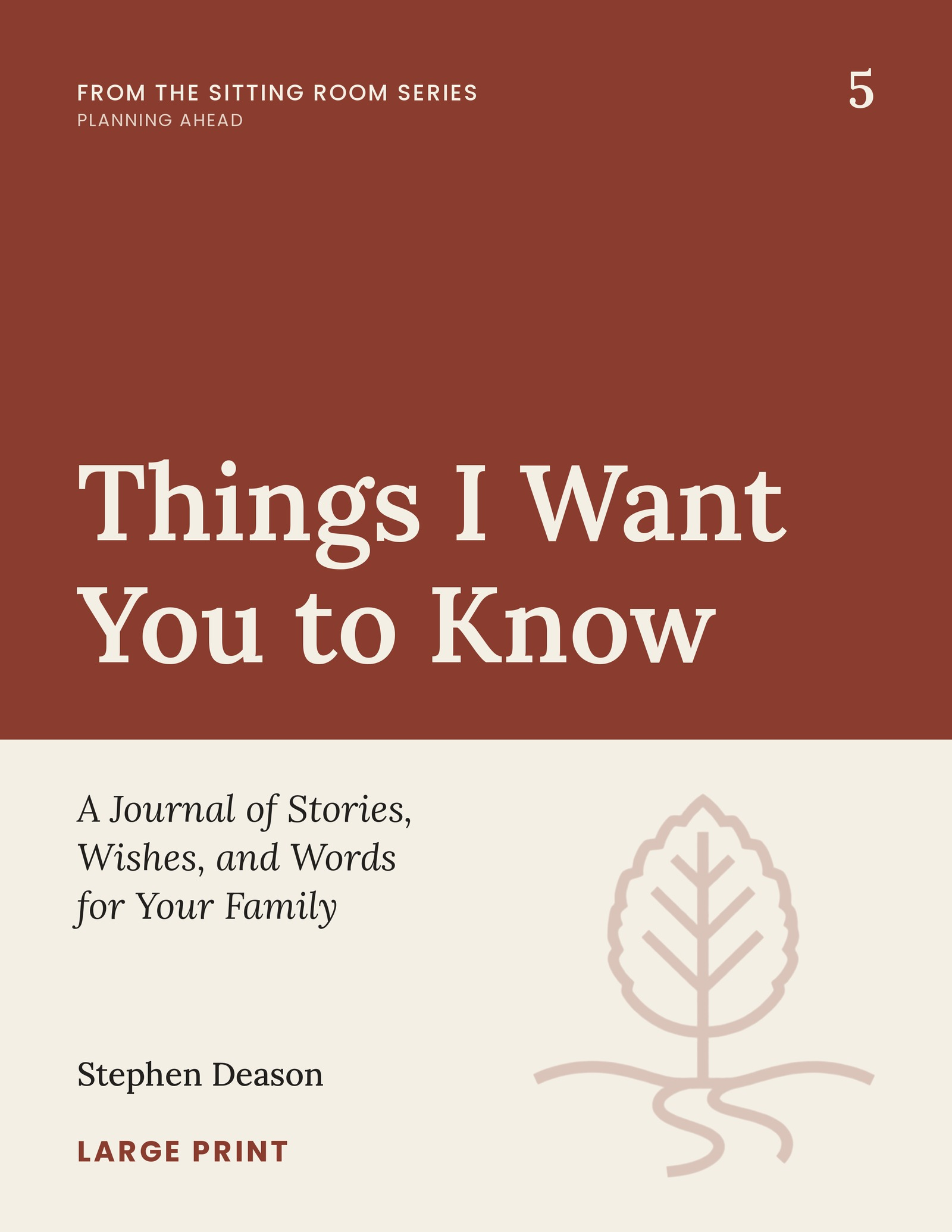
Things I Want You to Know offers prompts for stories, wishes, and words for family. Its questions range across childhood, home, relationships, working life, and messages to individual relatives. A reader can begin with a familiar place or a small remembered detail.
Let the memory choose the page
The journal invites readers to answer prompts in any order and skip questions they prefer to leave alone. Ask your grandmother which page interests her. Give her time to read the prompt and decide whether she wants to write, speak, or come back another day.
The House I Remember asks the writer to walk family through a remembered childhood home, room by room. That prompt offers a starting place for the story of a kitchen dish. Your grandmother might remember a shelf, the table beneath it, or the relative who brought food into the room.
Follow the detail your grandmother chooses. Ask what she remembers seeing or hearing there. Leave room for a short answer that holds a clear image.
Keep the voice
The journal's instructions allow a helper to write while the writer talks. They also suggest recording the story on a phone and copying it into the journal later. Ask your grandmother's permission before recording, and agree where the recording will be kept.
Write down the phrases your grandmother uses. If a name or place needs clarification, ask her to explain it. Read the written passage back so she can correct the meaning or add something she wants the family to understand.
When a helper writes the story, the instructions call for “told to” and the helper's name at the bottom of the page. Date the page as well. Those details let later readers understand when the memory was recorded and who helped put the words on paper.
Give a small detail room
A brief memory can stand comfortably beside a photograph, a recipe card, or a letter. The journal suggests adding those materials to its pages. Ask your grandmother whether an item belongs with the story and whether she wants to keep the original elsewhere.
For the remembered dish, she might describe who used it and what the family ate from it. She might remember a meal that went badly, a visitor who came every week, or the work of cleaning up afterward. Let her decide where the account ends.
If your grandmother wants more room, use the continuation space or add a page. Keep her name, the prompt, and the date with the added material so someone reading later can follow the connection.
Agree who may read it
The About Me section includes space to say when family may read the journal: now, a page at a time, or later. Ask your grandmother to make that choice before circulating a completed story.
She may want to read a passage aloud herself. She may prefer to share it privately with a particular relative. Write down her preference and respect the limits she sets.
The journal also asks where it is kept. Choose a safe location with your grandmother and tell the trusted relative she selects. If she wants a backup photograph of a completed page, help her make one and agree where that copy belongs.
Open the journal to a prompt your grandmother chooses, write the date, and ask her to describe the detail she most wants the family to remember.
Related book
Things I Want You to Know is available free as a journal of stories, wishes, and words for family, with printable pages.