
At the end of a difficult day, a blank journal page can feel like another task waiting for the right words. You remember the late bus, the missed call, and the dinner you nearly skipped. A useful place to begin is the event you can describe most clearly.
Write what happened. Then add what helped you get through that part of the day. “My sister called while I made dinner” gives you a person, an activity, and a moment you can return to tomorrow.
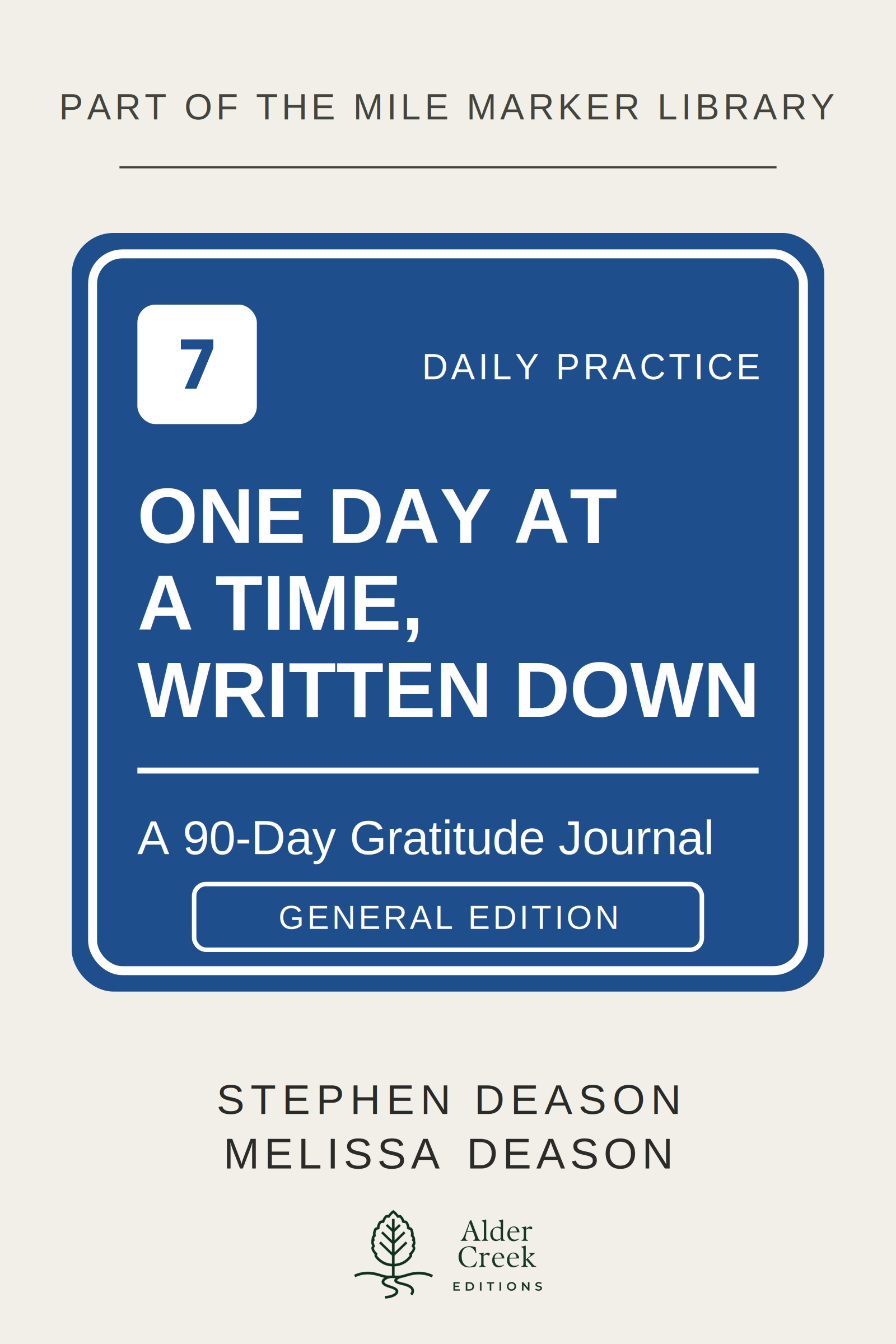
One Day at a Time, Written Down, by Stephen Deason and Melissa Deason, offers morning and evening prompts for this kind of attention. The morning pages ask readers to prepare an action for the day. The evening pages ask readers to notice good things, consider what helped those things happen, and choose an action for tomorrow.
Use an ordinary detail
Start with something you observed. Perhaps a neighbor kept a parcel safe, a friend answered a message, or you made the meal you had planned. Write the detail in words you would use to tell someone about the day.
Then look at the journal's question about what made the good thing happen. The answer may involve your own preparation, another person's help, or an arrangement you want to keep. You might write, “I bought ingredients yesterday, so I had food ready when I got home.”
That sentence gives tomorrow's planning a place to begin. Check the ingredients before shopping. Ask the friend when you can speak again. Thank the neighbor and confirm the arrangement if another parcel is due. Follow the detail far enough to see an action you can take.
The evening page also asks who helped during the day. Name the friend or relative so you can recognize the particular support. If you want to contact that supporter tomorrow, put the name beside the next action.
Connect the evening to the morning
The journal's morning plan asks for an action with a time or name. You can prepare that entry from the evening's observations. “Ask my sister whether she can call while I make dinner” follows directly from noticing that yesterday's conversation was useful.
The morning pages also ask readers to consider a difficult hour and what they will do during that hour. Keep the planned action close to the circumstances. If the evening gap needs attention, arrange the activity or call before the gap begins.
You can keep the journal beside something you already use in the morning or evening. Its Building the Habit worksheet has spaces for those existing activities, where the journal will live, and what you will write on a hard day. Fill in the arrangements you want to try, then keep a pen with the book.
If you miss an entry, the book directs you to continue with the next blank page. If you have little energy to write, use the brief entry you planned for a difficult day. Leave space for anything you want to return to later.
Choose the edition that suits your reading
The General Edition and Christian Edition use the same practical morning and evening structure. Their opening readings differ. The General Edition draws on general readings and quotations; the Christian Edition uses Scripture. Both editions are available through the book's edition page, including their free printable downloads.
Choose the readings you want beside your daily prompts. You can inspect the free editions before choosing a printed copy. Keep any private details in a form you are comfortable storing, using initials or shorthand when appropriate.
For today's entry, write an event you remember, name the support that helped, and choose a next action connected to that detail. Put tomorrow's action beside the name or time you will need to carry it out.
Related book
One Day at a Time, Written Down, by Stephen Deason and Melissa Deason. The edition page links to the General and Christian editions and their free printables.