
Stopping drinking or using can bring an immediate question: What happens now? The mind can jump from the next appointment to work, money, damaged relationships, and every conversation waiting at home. Each concern asks for attention at once.
A useful place to begin is the next action that connects you with appropriate care and another person. The larger questions can stay on a written list while that action gets your attention.
Consider an illustrative situation. A person has decided to seek help, has a phone nearby, and keeps opening the contact list. The decision feels enormous. The next action can be specific: call a clinician, explain the substance use, and ask where to receive an assessment. A friend can sit beside the person during the call.
Begin with medical safety
Medical guidance belongs at the beginning of the plan. Suddenly stopping alcohol after prolonged heavy drinking can cause potentially life-threatening withdrawal. The National Institute on Alcohol Abuse and Alcoholism advises seeking medical help to plan a safe recovery. A clinician can assess the circumstances and recommend appropriate care. (NIAAA)
Stopping some medicines and drugs also carries withdrawal risks. The FDA warns that suddenly stopping benzodiazepines or reducing the dose too quickly can cause life-threatening reactions, including seizures. Discuss a plan with the prescribing clinician before changing a benzodiazepine dose. (FDA benzodiazepine safety communication)
When you contact a clinician, explain what you have been taking, when you last took it, any symptoms you are experiencing, and any previous withdrawal problems. Include prescribed medicines and other substances. Ask the clinician what to do next and where to go for assessment.
For immediate danger or a medical emergency, call 911. For a suicide or mental health crisis in the United States, call or text 988. For help finding substance use treatment, SAMHSA's National Helpline is 1-800-662-4357. The treatment referral service is free and confidential, with assistance available around the clock. (SAMHSA)
Save the appropriate contact while the phone is in your hand. A contact you can open quickly is useful when making another decision feels difficult.
Give a person a clear request
A request for support becomes easier to act on when the request names the task. “Can you stay on the phone while I call the clinic?” gives a friend a clear job. “Can you help me arrange a ride to the appointment?” identifies the practical help you need.
Choose someone you trust who can follow through. Tell that person where you are and what the clinician has advised. If a treatment service arranges your care, ask how a friend or family member can help with transportation, belongings, or communication.
You can also write down a brief message before calling. For example: “I want help with my drinking. I need an assessment and help understanding the next step.” Reading a prepared sentence can get the conversation started.
Put the next action where you can see it
Use a scrap of paper or a phone note. Write the contact, the agreed action, and the information needed to carry out that action. An appointment note might include the destination, arrival instructions, transportation arrangement, and the person accompanying you.
Keep a separate place for concerns about work, money, and relationships. Writing a concern preserves it for a later conversation. Give the immediate care arrangement a clear space of its own.
After a call, record what the clinician or service told you. Repeat the instructions back during the conversation so the person helping you can clarify anything you misunderstood. Ask whom to contact if your circumstances or symptoms change.
A place to begin reading
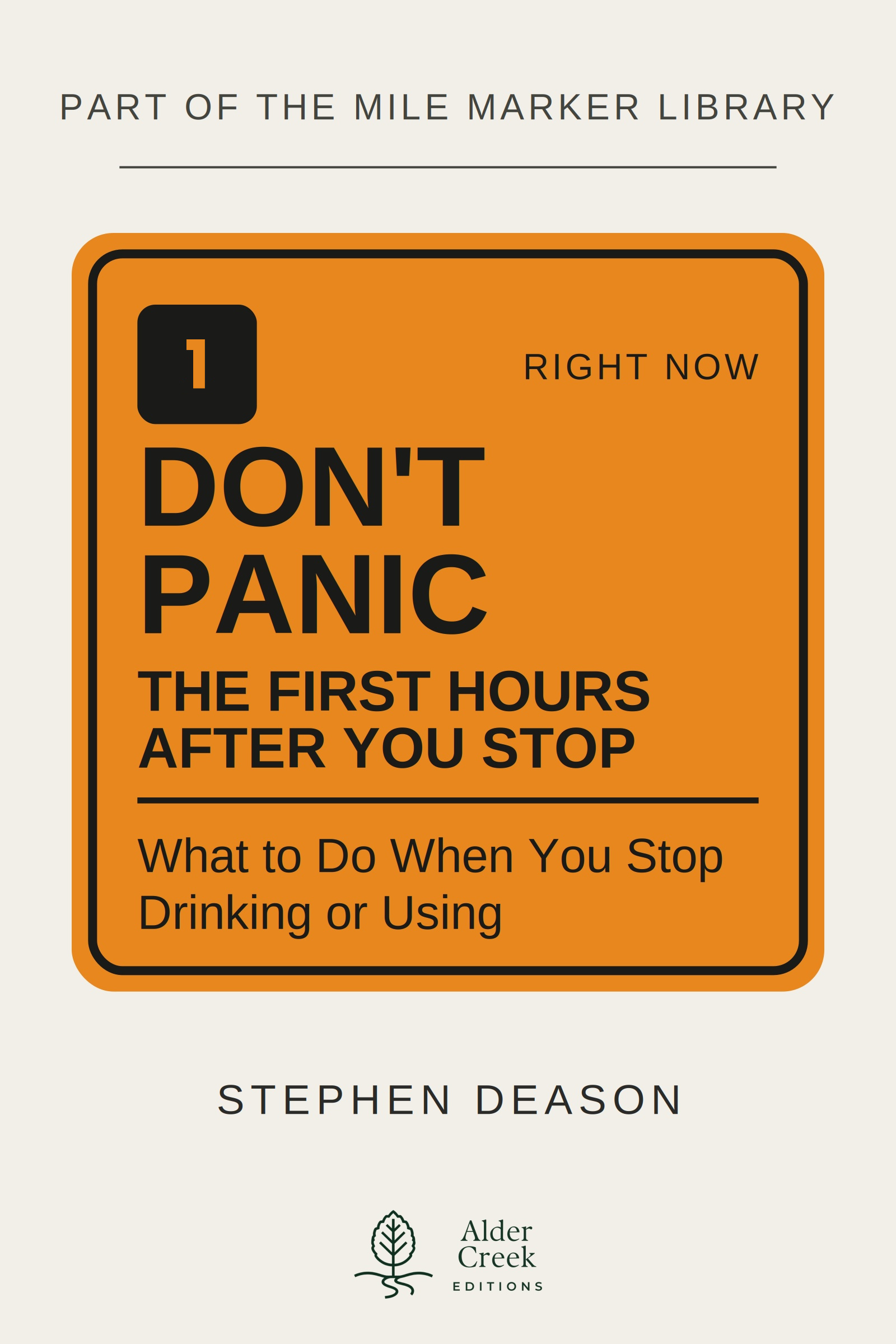
Don't Panic: The First Hours After You Stop opens The Mile Marker Library on its Right Now shelf. The book includes emergency contacts, guidance about seeking medical help, and practical prompts for getting through the early hours. The complete book is available as a free download, alongside its paperback edition.
Begin by making a visible contact note: the person or service you will call, the words you want to say, and the support you need to complete the call. Keep that note beside your phone. Then make the connection and write down the next agreed action.