
An emergency information book is a working record, not a prediction that something terrible will happen. A family uses the record to avoid a familiar problem: a medication name is on one person's phone, an insurance card is in a drawer, a specialist's office is in an old text thread, and the person who knows where everything is cannot answer the phone. When a decision or a call cannot wait, a scattered record forces everyone to begin by searching.
The useful version is smaller than a complete life archive. It keeps the current details that help someone make the next appropriate contact, explain the situation accurately, and find documents that need to travel later. The person whose information is being organized should help decide what belongs in the record, where the record stays, and who may use it. A family can prepare together without taking control away from the person at the center of the plan.
A written record supports the right call: if someone is in immediate danger or has a medical emergency, call 911. An information book can help a family answer questions after emergency help is on the way. It does not replace emergency care.
Start with the information people reach for first
Keep the first page easy to recognize. A person opening the record should be able to find the individual's full name, date of birth, home address, primary emergency contact, and the name and number of the primary care office. Add the current pharmacy and any active specialists only when those contacts could help with the present situation. Avoid filling the page with old numbers that make a rushed caller guess.
The National Institute on Aging includes health information and documents among the essentials older adults should keep ready for severe weather and other disasters. The agency also recommends keeping important documents protected and maintaining a digital copy when appropriate. Its disaster-preparedness guidance can help a family think through the wider home plan. The working record should still stay focused on the details that need to be found quickly.
Include a short note explaining where the record lives and who can access it. “Blue folder beside the phone” is more useful than a vague reminder that the paperwork is somewhere safe. If the family uses a private digital backup, write down the agreed person who can locate it. Do not put passwords, account numbers, or other sensitive details into a copy that may travel in a car, purse, or hospital waiting room.
Keep medicines and health details current
A medication list needs more than a medicine's name. The National Institute on Aging advises people to record the amount taken and the time of day for each prescription, over-the-counter medicine, vitamin, herbal remedy, and supplement. The same guidance recommends noting the prescriber and the reason for a prescription when that information is available. The agency's medication guidance also suggests keeping a copy at home and another copy in a wallet or purse.
Write the list from the current bottles or the current medication record, then bring the list to the next appointment or pharmacy conversation for review. Do not rely on memory, an old discharge paper, or a list copied years ago. If someone is unsure why a medicine is being taken or whether the dose is current, leave a question for the prescribing clinician instead of guessing.
Alongside the medication page, record known allergies, active health conditions the person wishes to share, mobility or communication needs, and the name of the clinician who knows the person's current care. A brief, factual note is better than a long medical history that no one can read under pressure. The record should describe what is known. It should not diagnose a new symptom or tell a family how to respond to a medical change.
Make the contact page specific
An emergency contact is not simply the person listed first in a phone. The family should decide what each contact can realistically do. One person may be able to meet an ambulance or unlock the house. Another person may know the medication list. A relative who lives farther away may be the best person to update other family members. Naming the role helps a caller ask for the right help without making one person responsible for every task.
The Federal Emergency Management Agency's family communication plan asks households to keep contact information in a paper copy and to share that copy with the people who may need it. The plan also includes an out-of-town contact and meeting locations, because normal communication can be interrupted in a disaster. FEMA's planning document offers a useful model for deciding whom to contact and where the information should be kept.
For a family care record, list the name, relationship or role, primary number, backup number if needed, and the reason to call. Ask each person before adding the details. A contact page works when the people on it know that they are part of the plan and can say what help they can offer. The page becomes less useful when it quietly assigns work to people who never agreed to carry it.
Point to important documents without carrying every original
Families often need to know that a document exists and where the original is kept. That is different from carrying every original document in an emergency folder. A note can identify the location of insurance cards, medical orders, advance-directive documents, a safe-deposit box, or other records that a qualified professional may need to review. Keep the original documents in the agreed secure location unless a professional tells the family to bring them.
The National Institute on Aging's checklist for getting affairs in order separates personal, financial, and health information. The health section includes current prescriptions, health insurance details, and copies of medical orders or forms. The checklist is a starting point for organizing records. Questions about legal authority, consent, money, or the meaning of a document belong with the relevant attorney, clinician, financial professional, or institution.
Keep the distinction clear for every family member. A folder can tell someone where a document is stored. A folder does not give someone permission to make decisions, speak with a provider, or access records. The person whose information is involved should decide what can be shared whenever that person can make the decision. A family should ask the appropriate professional when a situation involves privacy or authority.
Use the record before an emergency
The first real test should not happen at midnight or from an emergency department waiting room. Open the record during an ordinary family conversation. Can someone find the current medicine list? Can someone locate the primary care office? Does the emergency contact know that the person is listed? Is the location of the record clear to the people who may need it? These small checks show what needs to change while the family can still discuss it calmly.
Review the record after a medication change, a new diagnosis, an appointment with new instructions, a hospital stay, a move, or a change in the person who should receive a call. Do not treat an update as a separate project that needs a perfect afternoon. Cross out an old number, add the next appointment, or replace one page while the change is fresh. A short current record is more useful than a polished record that has not been opened for years.
For a broader family record, the caregiver binder guide explains how to keep appointments, questions, and handoffs in one working place. The emergency information book should stay closer to immediate essentials. A family can keep the short record by the phone and the wider binder in the place where family planning normally happens.
Give the person at the center of care a voice
Organization can become another way for a family to talk around an older adult. The better record begins with the person's own priorities. Ask who the person wants called first, what information should stay private, which clinician knows the current situation, and where the person wants the paper copy kept. A spouse, father, aunt, or grandmother may have a different answer than the family expects.
A written record also benefits from plain language. Write “Call Dr. Lee's office for medication questions” instead of “medical.” Write “Sister can meet at the house after work” instead of “family support.” Concrete words make it easier for another person to understand the next action. They also make it easier for the person whose information is included to correct a page that does not reflect the person's wishes.
Some situations need professional help, not a family form. Ask a clinician about health changes, medication concerns, symptoms, or treatment instructions. Ask a qualified legal or financial professional about documents and authority. Call 911 for immediate danger or a medical emergency. The value of the record is that it helps the family reach the right person with clearer information.
Alder Creek Editions
Put the first details where a family can find them
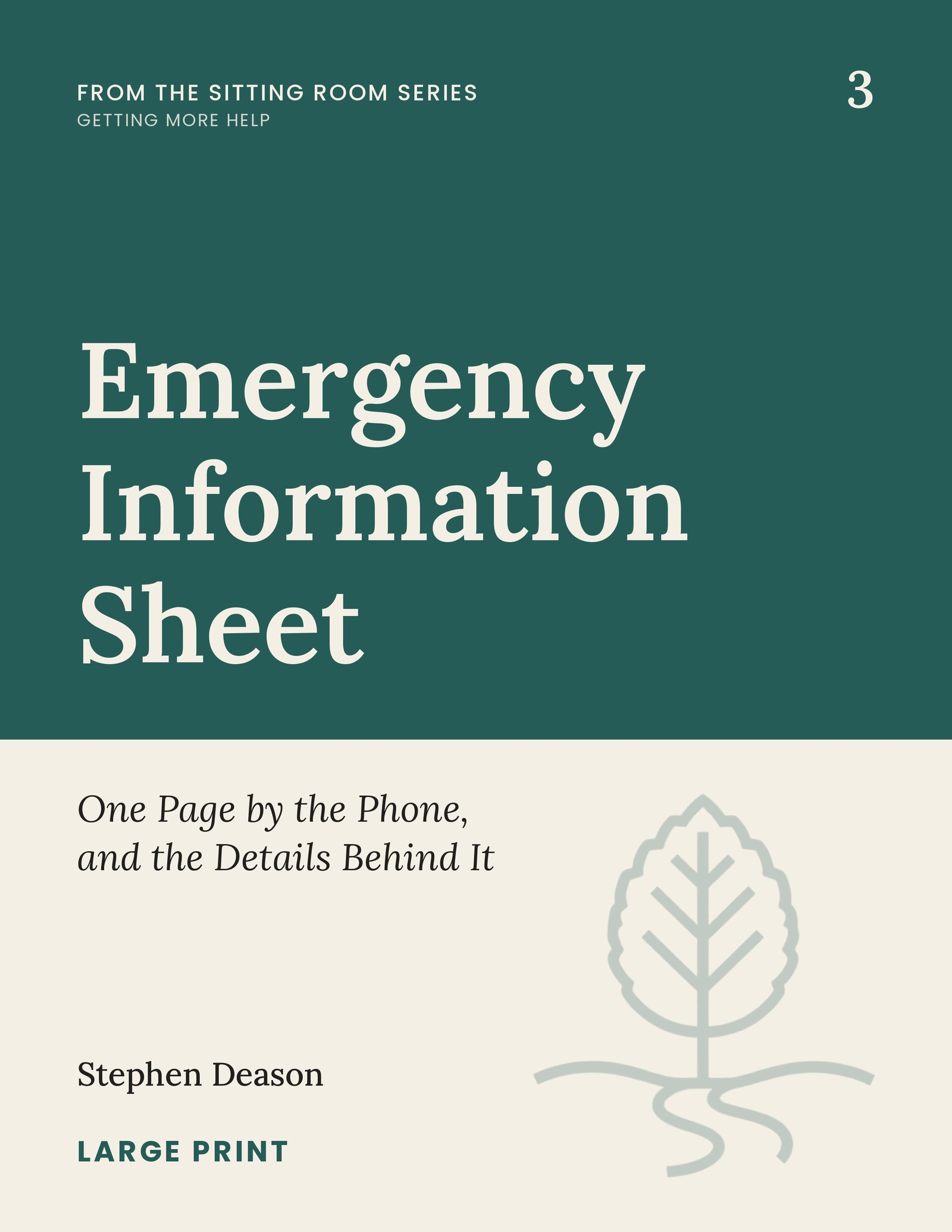
Emergency Information Sheet is a free printable for recording key health details, medicines, contacts, and the location of important documents. Fill it in with the person whose information it holds, then keep it in the agreed place.
Explore Emergency Information Sheet
Frequently asked questions
Emergency information record questions
What information should be in an emergency information book?
Keep the details that a family, clinician, or emergency responder may need to find quickly: current medicines, allergies, health conditions, emergency contacts, clinicians, insurance information, and the location of relevant documents. Include only information the person has agreed to share, and update it after a change.
Should an emergency information book include original legal documents?
Usually, no. A working record can state where an original document is safely kept and who can answer questions about it. Whether a document gives someone authority is a legal question that belongs with the appropriate attorney, clinician, or institution.
How often should emergency information be updated?
Review the record after a medication change, hospital stay, new diagnosis, new clinician, move, or change in the person who should be called. A regular check also helps remove an old number before someone needs it.
Can an emergency information sheet replace a medical alert system or emergency plan?
No. A written record can help people locate agreed information. It does not summon help, assess an emergency, provide medical advice, or replace an emergency plan. Call 911 for an immediate emergency.

